Tethys
a monument to the primordial sea
2025/2032
Concrete
550 x 400 x 450 cm
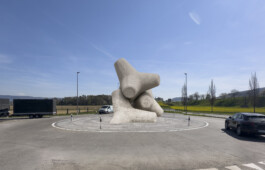
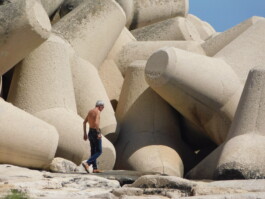
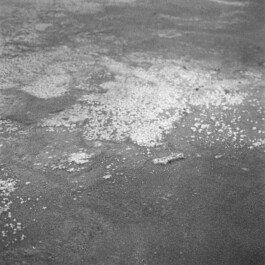
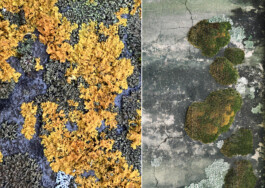
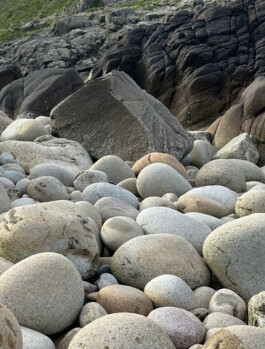
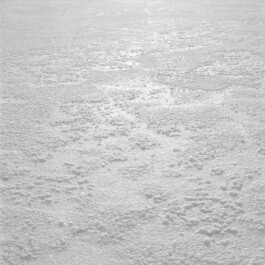
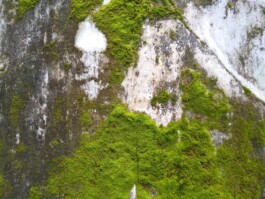
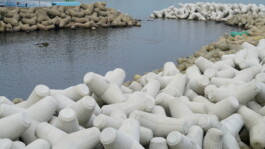
The thought that our Swiss salt originates from a primordial sea has fascinated me. It illustrates the transformative nature of salt, which never runs out but is constantly being redeposited and remains in motion. The salt deposit in Riburg tells the hidden, unseen story of this region. I began to think about and research the ancient Tethys Sea. About 240 million years ago, it covered what is now Switzerland, until it closed off about 50 million years ago due to the collision of the African and European continents. For about 150 million years, this landscape lay underwater. I would like to create a monument to this ancient sea. As I stood on the roundabout, an image came to mind: a sea level stretching above my head. I thought of coastal landscapes where tides (ebb and flow) leave visible marks on the surface, revealing the potential water level. On a larger timescale, changes in topography caused by such bodies of water also become visible. Concrete tetrapods, which use their four «arms» to break the force of the waves and reduce coastal erosion, are a response to this. They interlock to form stable structures that anchor the mainland and function as coastal foundations. It is such foundations that could endure and bear the surface traces of the tides. The lower part of the sculpture is sandblasted in a circular motion to achieve three effects: - The color lightens as the light-colored aggregate becomes visible. - Contour lines and a textured surface emerge. - Over time, the treated surface will become increasingly distinct from the upper part—lichens and mosses will begin to colonize it. In this way, the waterline I originally envisioned will become increasingly distinct over time. The weathering of the surface is part of the concept and will enhance the sculpture’s impact as time goes on. Temporality and the transformation of the material are central components of the work’s expression. Thus, in the future, one can drive underneath the «former» waterline and reflect on the primordial Tethys Sea and its salt.